My name is Victoria and i am an HND student studying film. Blogs will include reviews and criticisms of films… enjoy 🙂
Be yourself; Everyone else is already taken.
— Oscar Wilde.
This is the first post on my new blog. I’m just getting this new blog going, so stay tuned for more. Subscribe below to get notified when I post new updates.
To begin with I believe that postmodernism suggests that the reality we are exposed to are always preceded by models and depictions; implicitly meaning that all of our experiences of reality are either a simulation or a simulacra. Additionally, postmodernism has no further meaning behind the representation; all of reality is a mediated simulation.
Postmodernism allows us to experience our lives as a perpetual present because we are always working towards something, whether it financially saving or envisioning an idealistic future in the year 2019.
Postmodernism is a theory consisting of five elements; its approach to culture through critiquing metanarratives such as Marxism and psychoanalysis; its focus on cultural representations across media; its attentive towards new media drawing out the complications of our experiences in reality; it challenges traditional conceptions of identity and subjectivity (particular how human identity ties with self consciousness), and its emphasis of pluralism in terms of race, gender, sexuality and class.
The postmodern critique of narratives, personally I believe to be problematic because it limits the audiences ability to consider political questions in historical context: there is a tendency to ask questions concerning space instead of questions concerning time and teleology. By emphasising space over time, Postmodernism eschews concerns with essence and depth and would rather focus on surface appearances. Through postmodernism critiquing the media; its theory suggests that our experiences of reality are always preceded by representations which heavily implies that all of our experiences are either a simulation or simulacra. For postmodernism there is no deeper reality behind the representation; all is a mediated simulation.
Focusing on issues with representation, postmodernism cultural texts often comprise references to the past which are filled with stereotypes of past styles. All these references are to a simulated past, this is why mainly characters from history are in heavy debate when it comes to postmodernism about references to these characters being ironic or if it’s just depoliticisation of the past.
Postmodernism is drawn out by converging cultures and commodifications. Postmodernism disavows the commodity-class dynamic of capitalism, meaning it can be supportive of other classes however, it can also be seen as underserving audiences by ignoring the underlying class politics of capitalist society.
Fordism espoused the theory of paying workers enough in wages so that they are able to buy the products they helped produce. Essentially, workers are now becoming consumers. By paying workers enough to do this quality of life is not only improved for the customer but it avoids the crisis of overproduction. Fordism and post-fordism are terms that reflect the political economy in the post-ww2 period. Post-fordism signalled a transition away from the welfare state and towards contemporary neoliberalism.
A majority of postmodernist theorists suggest that the shift away from industrial production to a more technology driven economy (postindustrial society) has shown that technology and knowledge are the underlying forces of change; rather than struggles of social class between capital and labour. In addition, the term postindustrial does not mean industrial production has deceased but instead means that industrial production has advanced to the developing world where labour is cheaper and regulations are less strict.
Francois Lyotard wrote in his book ‘The Postmodernism Condition’ (1979) that technology is the driving force of history rather than class struggle. Lyotard argued that metanarratives of history like historical materialism is no longer valid. According to Lyotard, grand narrative has lost its credibility due to postwar changes in technology and there is a rise in neoliberal capitalism with the reducing threat of a communist alternative. Lyotard defines postmodernism as: ” incredulity towards metanarratives.”
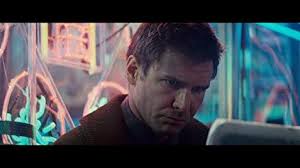
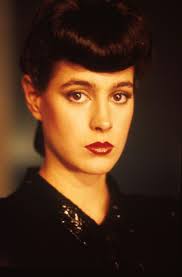
“History is hysterical; and is only constituted if we consider it, only if we look at it- and in order to look at it we must be excluded from it.” That is history for roland Barthes and the replicants who are perfect duplicate of a human. Replicants can talk and feel emotion the only thing they are deprived of is a history, for that they must be killed. The replicants are bioengineered androids, however the Nexus 6 is identical to humans but their lifespan only lasts four years to avoid the replicant becoming fully self aware of its emotions. identification of replicants was known by answering questions in the Voight-Kampff test, the only two people this hasn’t worked for is Racheal – her true identity could not be deciphered with the test and is proved to have a lifespan over four years – and Deckard who avoided talking about if has participated in the test or not with every opportunity that arose.
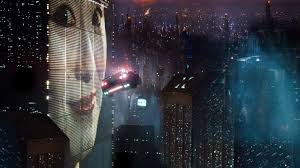
I believe Blade Runner is a metaphor of the postmodern condition. Theorist Jameson suggests that the postmodern condition is characterised by schizophrenic temporality and a spatial pastiche. Schizophrenia is basically the breakdown of the relationship between signifiers linked to failure of access to the symbolic. With pastiche there are boundaries and a process of erosion of distinctions. Pastiche is intended as an aesthetic of quotations pushed to their boundaries; it is an imitation of styles deprived of any satirical impulse.
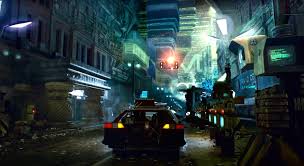
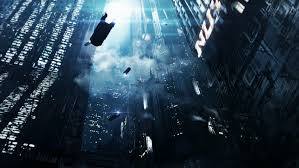
The line between postmodernism and late capitalism highlighted further in the films representation of postindustrial decay. The city in Blade Runner is not modern but postmodern with an orderly layout if buildings with hypermechanized interiors. This creates an aesthetic of decay and the dark side of technology.
Moreover, replicants are the perfect simulacra – a convergence of genetics enacting the dimension of simulation. Baudrillard describes the simulacrum as “an operational double, a metastable, programmatic, perfect descriptive machine which provides all the signs of real and short circuits all its vicissitudes.” i feel this is the perfect definition to give towards the replicants and their capacity of simulation in the narrative motivation of Blade Runner. In 2019, L.A, simulation is completely dominant as the effect of existence and operations of the replicants; “it is that of hallucinatory resemblance of the real within itself.”
Racheal manages to reach the perfect simulation of a human, which indicates that she is internalising the signs and symptoms to the point where there is a blurred line between true and false. The system has achieved perfection with Racheal and it is noted that she is the perfect replicant because she doesn’t know if she is real or not – to say that she simulates her symptoms is to say she realises this and goes to experience them. Ultimately, the replicants are superior to humans but they have the problem of a fragmented temporality – schizophrenic vertigo.
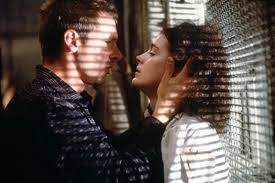
The mystery to if Deckard is a replicant will always remain unanswered even under the heavy implications that he is when Edward follows deckard around leaving a trail of origami signifying he knows whats always going on inside his brain. However, I personally believe given on the information we were provided with Racheal I have the theory that Deckard is also a replicant with no expiration date and their love for each other was already written for them.
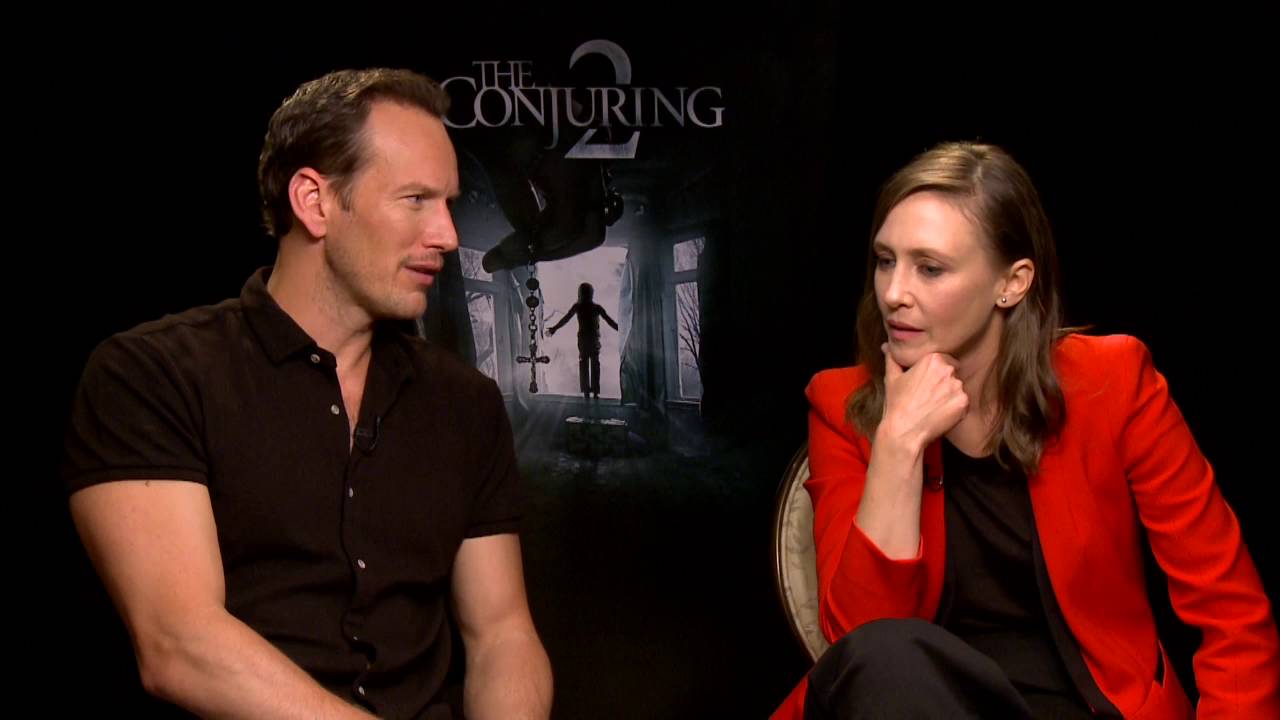
The Conjuring mythologies are a supernatural horror film directed by the talented – James Wan. Moreover, Patrick Wilson and Vera Farminga star as Ed and Lorraine Warren; demonologists and authors associated with the real-life hauntings – which even inspired The Amityville Horror franchise and Annabelle.
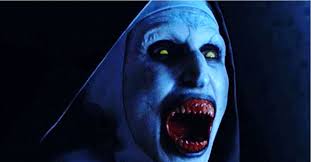
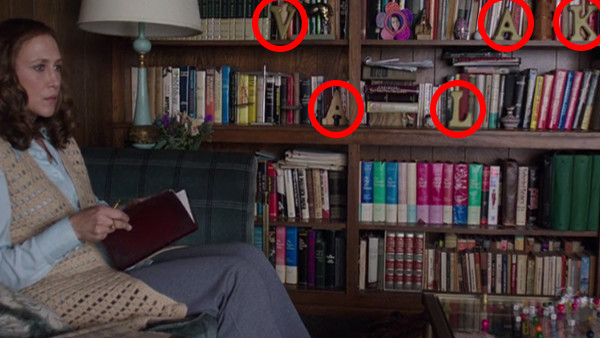
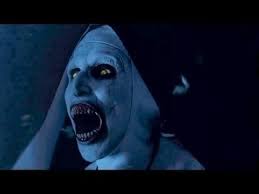
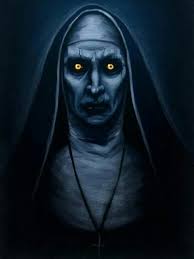
After the inaugural of the franchise, the sequel reveals Valak for the first time whilst also showing Valak as the overarching antagonist for the whole franchise. Valak first appeared during a seance to further investigate if a demonic presence was responsible for Ronald DeFeo Jr. murdering his family on November 13th, 1974. When Valak reveals itself in the form of a nun to torment Lorraine’s faith in her own home, Valak lures her to the basement. Knowing her husband was important to her, Valak gifted her with a vision of Ed being impaled. Since that moment, Valak has continued to haunt Lorraine since, using the painting Ed was compelled to create which captures Valak in nun form. Later in the film, it revealed by Lorraine that Valak was the mastermind manipulating the spirit of Bill Wilkins like a puppeteer to prevent everyone seeing the true perpetrator.
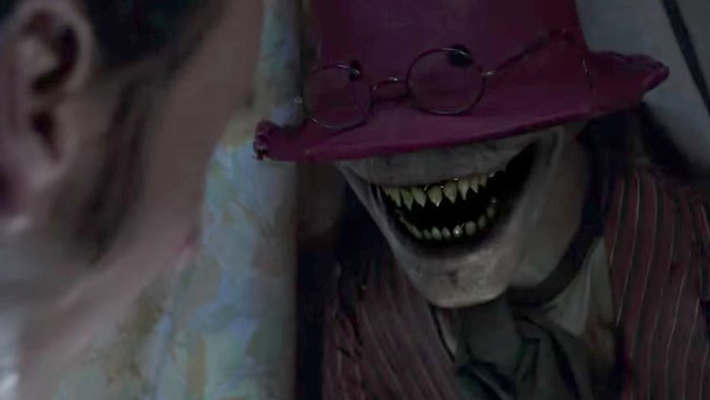
Valak’s presence is significant at the end of the film when Ed and Lorraine learn that Valak is behind everything and return to the Hodgson residence, Valak partially blinds Ed by bursting steam pipes in his eyes. Valak – in the form of the Crooked Man – also appears before Billy in an attempt to murder him with an umbrella but fails down to Ed’s resistance. At the ending of the film; Lorraine confronts Valak (as the nun) and condemns the entity back to hell.
Valak was also the titular antagonist for the 2018 spinoff ‘The Nun.’ In this prequal, it reveals that the Cârta Monastery was built in Romania by a duke centuries ago. The Duke however, becomes obsessed with Satanism and summons a demonic force to the catacombs. The demon was killed by the members of the Vatican who then sealed the rift with the Blood of Christ. Hundreds of years have passed and the Monastery was bombed heavily in World War II. In the occurring destruction, it allowed the demon to escape by the rift being opened and Valak was released from its imprisonment. Valak took the form of a nun in order to blend in with the other nuns and to mock their unbreakable faith. Over the years the nuns have continued to pray constantly in communion to fight the evil, but all was in vain as Valak openly roamed the Monastery as it wished.
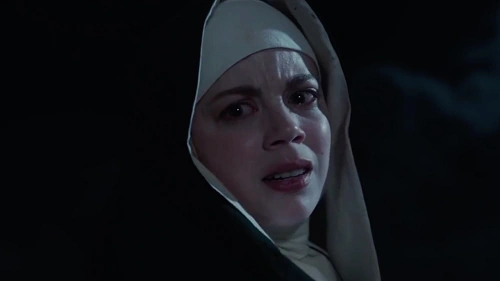
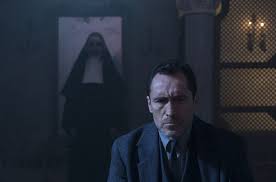
In 1952, Valak had executed the nuns leaving two survivors. Sister Victoria, commits suicide to stop Valak from claiming her body as a host, with a key in her hand. After the discovery of the nuns hanging corpse Sister Irene and Father Burke are instructed by the Vatican to investigate. Valak is seen manipulating the characters throughout the film ranging from; appearing to Father Burke as the young boy who had died from an exorcism which had gone horribly wrong or showing Sister Irene mass illusions of the nuns being killed. When the catacombs flood, Valak attempts to strangle Sister Irene to her death but whilst Valak inspects her body for any signs of life, Sister Irene spits the Blood of Christ onto Valak’s face, injuring the demon severely. From this, the rift is resealed. However, it is proved that this is not the end of Valak as when Father Burke, Sister Irene and Frenchie leave it is revealed that Frenchie has an inverted cross branded on the back of his neck. This then segues to the inaugural film ‘The Conjuring’, where during a lesson The Warrens are giving students about demonic possession.
‘The Nun’ centres on the origins of Valak the demon who has later become a major part of ‘The Conjuring’ film universe. We know Valak appears in ‘The Conjuring 2,’ and viciously haunts Ed and Lorraine Warren. ‘The Nun,’ provides exposition on how Valak made its way all the way from Romania to the USA to torment Lorraine and how Valak came to be embroiled in the haunting of Enfield, England in ‘The Conjuring 2.’
*One of my personal favourites* The end of ‘The Nun’ features a direct correlation to the first ‘Conjuring’ film. In the beginning of the film, when The Warrens are giving a lecture at Massachusetts Western University, they display footage of an exorcism in which they participated in and the strange occurrences witnessed whilst they filmed. The victim of the possession is Frenchie. Frenchie is a main character in the prequal ‘The Nun’ helping Father Burke and Sister Irene at the Romanian monastery. The end of ‘The Nun’ reveals that Valak successfully possessed Frenchie before Sister Irene sealed the rift to Hell in the catacombs; because Sister Irene already sealed the gateway to hell this was what allowed the demon to escape the confinement of the monastery into the real world. Frenchie reveals his name as Maurice at the end of the film which I believe is significant to the demon Valak as in ‘The Conjuring 2’ Valak reveals its name to Lorraine in many subliminal ways.
‘The Nun’ also features a retcon of the scene from ‘The Conjuring.’ On the screening, Frenchie can be seen whispering something to Lorraine, who reacts out of fear, from that moment Valak infests and begins to torment, The Warrens.
In ‘The Conjuring 2’ we learn that Lorraine has felt the presence of Valak for a while once she encountered the demon majorly during the Amityville case (THIS ACTUALLY REALLY HAPPENED…but since has been adapted into different movies starting with the original ‘The Amityville Horror), that is shown at the start of the film. It’s heavily implied that Valak must of been responsible for Ronnie DeFeo Jr. murdering his family in Amityville and also the hauntings that The Warrens investigated with the Lutz family. When Lorraine encounters Valak in her vision of the Amityville, Valak gifts her with a vision of Ed being impaled on a spike from a tree branch.
When Ed and Lorraine investigate the Enfield haunting it comes to Lorraine’s attention that it is also the work of the demon Valak. However, in the cathartic ending of the film Lorraine saves her husband banishing Valak back to hell and putting a stop to the Enfield hauntings.
We can see that throughout ‘The Conjuring’ universe Valak is a prominent character and without the film ‘The Nun’ the audience cannot establish the exposition of the demon and why it even takes the form of a nun, the prequal to the franchise reveals that the demon takes the from of a nun to blend in with the rest of the convent, we then see in ‘The Conjuring 2;’ Valak taking this form to mock Lorraine’s faith.
Valak also has a significant link to the ‘Annabelle’ movie which was a spin off from the inaugural ‘Conjuring’ film. In the film ‘Annabelle: Creation’ which is set in the year 1955, we learn how the doll is haunted when some orphans and their guardian – Sister Charlotte, move into the home of a dollmaker and his wife. It is revealed in the film that Sister Charlotte used to attend the monastery in Romania when she shows a photo of her and some of the other nuns that used to attend there as well – and in the background, masked barely hidden in a shadow Valak shows its presence. Now, if it wasn’t for ‘The Nun’ then the link of the monastery in Romania when Sister Charlotte shows the photo will hold no significance because the as the prequal shows that is where the gateway to hell is and it is also where Valak escaped it’s imprisonment and escaped into the real world.
As of ‘The Conjuring 2,’ in the cathartic ending that suggests that Valak has been banished back to hell, ‘The Nun’ shows that the demon has escaped from the gates of hell in the catacombs and the imprisonment of the Romanian monastery once before, and considering Valak is a significant leading villain throughout ‘The Conjuring’ universe it seems impossible that we see the end of the demon – Valak and how its path of destruction leads the movie universe.
My name is Victoria Smith and I am a HND student studying digital and creative media. I have a strong passion for talking and sharing my opinions about the industry but in particular I love to talk about film – especially horror.
I love to write about the industry and films without any bias and wanted to use this as an opportunity to share my work with others. I love to make short films and write scripts for my course and am hoping to expand that into a further business alongside my passion for writing.
If you would like to contact me for further information, discussions or even hire my video services then please email:







 Victoria's Movie Mania